Alone.
It’s the way we came,
it’s the way we’ll go.
Back in Anne’s boat,
I am rowing
in the dark.
Unlike her,
I know there’s no island,
no solace in fools’ parables,
no paternal goal
no fish shaped destination.
One father was enough,
without the royal flush,
I’ve had my fill.
Even on this pleasure cruise
the twins are with me.
Dolores, in the valleys
of the 20 foot waves
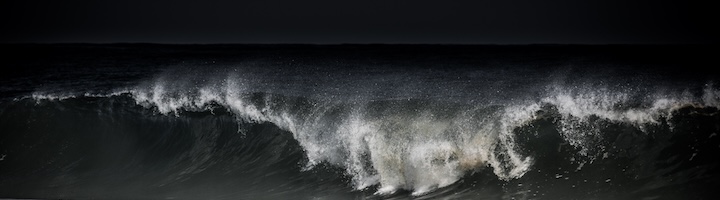
that hide the stars and moonlight,
Angustina is at the crest,
holding me above the darkness
until she lets go,
falling,
back into the valley.
I know this boat will endure
these harsh seas,
I’ve been here before
it’s been worse.
Solitude is not only comfort,
it’s necessary,
it’s hard enough to row for one.
I will find land,
peace is waiting for me,
for now, at least.
I was there,
under Hill’s weeping fig
I pulled the ground out
from underneath my heart.
Like a magician with a tablecloth
only taking the table with it,
leaving the dishes to fall.
What have I done?
How to return?
I am rowing.
Rowing is a free-write after repeated listening of Peter Gabriel’s Mercy Street, and a re-reading of Anne Sexton.
1. Form and Style
The poem is a free-write, composed in one continuous unbroken pass from first line to last, and it shows: no stanza breaks, no reordering, no returning to tidy an earlier line. Its shape follows the pressure of thought, accumulating by addition rather than by argument, with short breath-length lines that often carry a single clause or a single negation. The idiom is contemporary and unliterary — “pleasure cruise,” “I’ve had my fill,” “20 foot waves” — set against a vocabulary of parables, paternal goals, and fish-shaped destinations. That collision of plain modern speech with inherited religious symbol is the poem’s characteristic texture, and it takes its unguarded first person from the confessional tradition.
2. The Influences
The poem takes its situation almost wholesale from Anne Sexton and then argues with it. Sexton’s rower sets out across a dark sea alone, chanting “I am rowing,” bound for an island where God waits and where the rowing will finally end. This poem borrows the boat, the darkness, the open water, and the chant itself, and it keeps the association Sexton established between that voyage and a mind under strain. The debt is named outright in the fourth line — “Back in Anne’s boat” — which makes everything after it a response rather than an imitation. The word “back” does double duty: he has been in this boat before, and so has she.
What the poem refuses is the destination. Sexton’s crossing ends in a poker game with God, where she is dealt a royal flush and still loses, because God controls the deck and holds five aces on the strength of a wildcard she never knew about. This speaker declines to sit down at the table at all. “Without the royal flush” waves off both the hand and the game, on the grounds that the outcome was fixed before the cards were turned.
The two poems use Christian vocabulary in opposite directions. Sexton’s language is genuinely devotional even at its most irreverent; her God is real enough to cheat her, and the hidden wildcard is a wound precisely because the dealer exists. This poem inherits the vocabulary without the belief. The imagery is handled with the ease of long familiarity and the coolness of someone who stopped expecting anything from it years ago — fluent in the furniture, unmoved by the claims, retaining at most a mild fondness for the shapes. Solace, parables, the paternal goal, and the fish shape of the island are all named, and all named in order to be crossed out. The negations arrive in a run — “no solace in fools’ parables, no paternal goal, no fish shaped destination” — so that the sacred appears in the poem only in the grammar of denial. Nothing here is fumbled or attacked from outside. It is the tone of someone who grew up close to all of it and put it down a long time ago.
3. The Speaker’s Perspective
The speaker is turned inward throughout, narrating his own condition with unusual coolness. He is not discovering anything about himself over the course of the poem. He is reporting on terrain he already knows, and the flatness of the reporting is itself characterizing — this is a man who has taken his own inventory many times before.
Dolores and Angustina are depression and anxiety, and the poem treats them as lifelong company rather than as visitors. They are named, seated in the boat, and introduced with a joke: “Even on this pleasure cruise / the twins are with me.” The sarcasm is doing real work. Calling a night crossing through twenty-foot seas a pleasure cruise is the humour of someone long past being surprised by his own weather, and it lets him name the twins without pleading. Their placement is precise. Dolores waits in the valleys, in the troughs where the waves blot out the stars and the moonlight; Angustina is at the crest, holding him above the darkness, but only until she lets go — and the falling that follows is described as a return, not an accident. A weight below, a grip above that cannot be trusted. Between them there is no level water.
Solitude gets the same matter-of-factness. It is called comfort and then upgraded to necessity, with a practical reason attached: it is hard enough to row for one. This is a statement about present capacity, not a philosophy of living. The boat is at its limit and another body would sink the crossing. The poem is not making a case for solitude; it is describing where the speaker currently finds himself, and it gives itself away immediately, because he is rowing toward something rather than away from everyone.
The dismissal of the sacred belongs to the same clear-eyed accounting. “Fools’ parables” converts scripture into the patter of a con and locates the foolishness in the listener rather than the teller. But the refusal is not abstract — it runs through his literal father, a man he has a bad relationship with, whose failure makes the heavenly one redundant rather than necessary. One was enough, and the appetite for fathers is finished. Both are dismissed in a single breath because both offered the same thing: a destination assigned by someone else.
The one moment of real figurative pressure is the tablecloth. The trick is meant to leave everything standing; here it is inverted. He pulls the ground out from underneath his heart and takes the table with it, so the dishes fall. It is a self-inflicted collapse, performed with a showman’s deliberateness and exactly the wrong outcome, and the questions that follow — “What have I done? / How to return?” — put the guilt and the destination in the same breath.
That destination is land, and land is not Sexton’s island. An island is a fixed point on a chart, assigned by God, and reaching it ends the story; the rowing stops there because someone else has decided it should. Land has no coordinates. It is somewhere the speaker has already stood — “I was there” — which is what makes the course navigable at all, and the peace waiting for him there is a human arrangement rather than a reward. “For now, at least” keeps it honest: whatever he finds will have to be maintained after landfall.
And the rowing is the healing. It is not transit toward somewhere unvisited but the work of recovery, the labour of becoming someone able to arrive. He tore the ground out himself, and ground has to be rebuilt before anyone can stand on it. Approach and repair are the same voyage.
4. The Poem’s Key Theme
The poem argues that survival is unassisted, unglamorous, and continuous, and that the destination worth rowing toward is entirely of this world. The opening lines set the terms: we arrive alone and leave alone, and everything between is rowed by hand. Nothing intervenes. No island appears, no father waits at the end of the crossing, no parable resolves anything.
The disagreement with Sexton is the poem’s engine, and it is a disagreement between two people who share a boat. Sexton’s rowing is directed at a terminus. Her island is where the voyage stops, where the rower is finally met, and where the outcome is decided by someone other than her. The card game makes this explicit: she is dealt a royal flush, the best hand the game allows, and still loses to five aces, because God is dealing and the wildcard was never disclosed. The cruelty is real, but so is the encounter — someone was there to cheat her, and being cheated by God is still a form of being seen by him. This speaker cannot be cheated, because he has withdrawn from the game entirely. “One father was enough” performs the withdrawal in five words, collapsing the divine father and the human one into a single exhausted category and declining both. Sexton rows toward an ending. He rows toward a place, and there is no ending there, only arrival and the work that follows it.
Dolores and Angustina are what make the crossing hard rather than what the crossing is about, and the distinction matters. The poem does not dramatize them, plead with them, or ask to be rid of them. It gives them names, seats them in the boat, and rows. Because they have been aboard his whole life, they cannot be blamed for the wreck he is rowing back to repair. They are weather, not cause. The damage was his own doing, and the poem refuses to let his illnesses take the charge for it.
The Christian symbolism is handled with the familiarity of someone who learned it early and no longer needs it. The fish-shaped destination is the clearest instance: the fish is the oldest sign of the faith, the mark scratched to identify the safe house, and Sexton’s island carries that shape as a promise of harbour. The poem names the shape only to deny that any such island is out there. What is rejected is not the image — there is still some affection in the handling — but the claim beneath it: that the harbour is provided, that someone has prepared it, that the rower is expected. The parables get identical treatment, recognized as stories with a shape and a comfort, then dismissed as stories told to fools. The mockery is aimed at the promise, not the telling.
The fig tree completes the pattern and is where the poem is most deliberate. Scripture is thick with fig trees — cursed for barrenness, offering shade to the doubtful, standing in Eden as the source of the first covering — and an unmodified “fig tree” in a poem full of parables and paternal goals would drag all of that behind it. The poem forecloses that reading by naming the species. Hill’s weeping fig is a botanical name, a coordinate rather than a symbol, identifying a real tree in a real place where something actually happened. This is the method of the whole poem in miniature: take a sacred image, strip out the transcendence, keep the tenderness.
But the species name is not neutral either, because the word sitting inside it is “weeping.” The tree that marks the site of his happiness is, by its own common name, in mourning — and it is the exact spot where he pulled the ground out from underneath his heart. The name does the elegiac work the speaker will not do in his own voice, and it does it without any appeal to heaven. Grief is located in a tree’s species name rather than in a psalm. That is the poem’s entire theology: meaning is real, it is simply down here, in named things and particular places.
The hardest claim is left plain. He performed the trick that brought everything down, with a magician’s deliberateness and the dishes falling anyway, and no blame is distributed elsewhere. The guilt is stated as a question rather than a plea, and no absolution is requested, from anyone. There is no confession here, because confession requires a confessor and the poem has already sent him away. What remains is repair, done alone, at sea, with the twins aboard.
Which is what makes the destination legible in the end. Land, peace, and the heart he pulled the ground out from underneath are not three things but one – a person. This is why land can be found rather than located, why peace is waiting rather than granted, and why the poem needs no island: what he is rowing toward has no fixed position on any chart, and never did. Sexton’s rowing ends because God is at the end of it. His does not end, because nobody is holding his destination in place but himself — and he has to be fit to arrive. So the closing “I am rowing” carries none of her momentum toward release. It is simply what he does now, in the dark, until he can stand on that ground again.
So he rows.