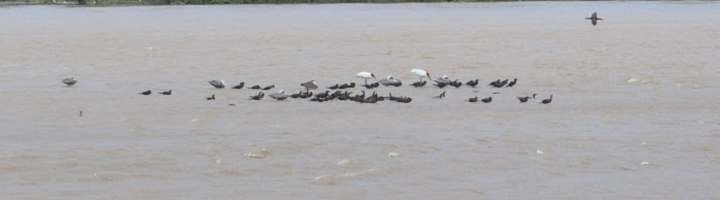
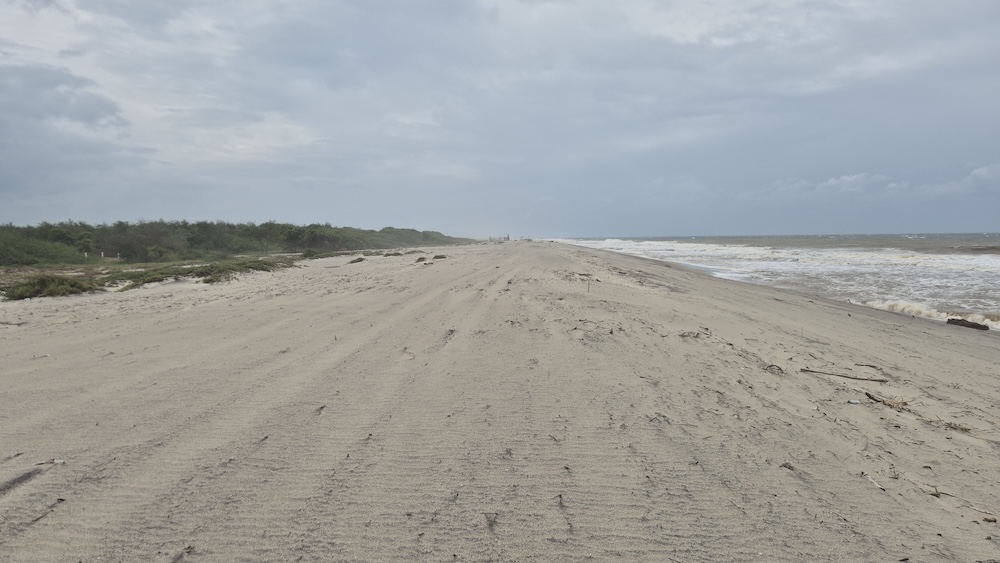
A photo and a video can capture the same moment and show two very different things. The photo, with its peaceful stillness, hides the raging wind’s deafening roar carrying stinging sand. I must continue through the pain to get to where the river meets the sea. Where I can be nearer to my heart. Before the river mouth, a large dune provides the wind with ten times more ammunition to turn me around. I won’t. I can’t. To my right, the waves crash violently, yet I can barely hear them over the gusts of sand, and the noise and voices in my head. To my left, the birds, who usually congregate on the river bank, have moved to the river to escape the scraping wind. They swim with the crocodiles instead – there’s mortal danger in that comfort. I reach the Bocca Barra, and I see the other side. That’s where I want to be. The current and the crocodiles make the crossing impossible, so I sit and wait. I feel the rain starting, I can feel it in my heart, trickling down my face from my eyes. A storm is coming.
Analysis
Walk in a Windstorm is a free-write, written during a contemplative walk on the beach in the middle of a windstorm created by a hurricane off the coast.
This piece is doing two things at once: describing a real, physically punishing walk along a beach to a river mouth, and using that walk as a map of an emotional state. The landscape is a stand-in for what’s happening inside the speaker.
The opening frame is the key to the whole piece. The photo versus video contrast is the author telling us how to read everything that follows. A photo of this beach would look serene, but the lived experience is deafening and painful. The implication is that the speaker might look the same way to others: calm and composed from the outside, with a storm going on underneath that nobody can see unless they’re inside the moment. It’s a statement about hidden suffering.
The journey is toward something or someone they love and can’t reach. “Where I can be nearer to my heart” suggests that what they’re walking toward isn’t just a place but a connection: a person, a memory, a former version of their life. “The other side” carries a strong double meaning. It can be literally the far bank, but it’s also about grief, someone or something is permanently out of reach. It could also be an estranged person, a lost relationship, or a life the speaker can see but can’t get back to. Either way, the longing is the emotional centre.
Resistance gets stronger the closer they get. The dune that gives the wind “ten times more ammunition” right before the destination captures how the hardest part of approaching something painful is often right at the threshold. “I won’t. I can’t.” is a deliberate pair: “I won’t” is defiance, a choice; “I can’t” is compulsion, as if turning back isn’t even possible. The author is driven, not just determined.
The internal noise drowns out the external world. The waves are crashing violently, but the speaker can barely hear them over the sand and “the noise and voices in my head.” This is the moment where the metaphor briefly drops away and the speaker says directly that the real storm is internal. Overwhelming thoughts are louder than reality.
The danger of comfort. To escape the scraping wind, the birds retreat into the river, where the crocodiles are. They’ve traded one pain for a more dangerous comfort. People cope with suffering by moving toward relief that carries hidden risk: numbing, avoidance, unhealthy attachments, anything that soothes in the short term while being quietly threatening.
After all that effort, the speaker reaches the river mouth and sees what they want, but the current and crocodiles make it impossible. So they sit and wait. This is the emotional core of the piece: you can get as close as possible to what you’ve lost and still be separated from it. There’s no resolution, only a kind of exhausted vigil. The rain arrives and turns out to be tears, felt “in my heart.” Then: “A storm is coming.” That last line reframes everything before it. All that wind and pain was only the prelude. The speaker senses that the real emotional reckoning hasn’t happened yet.